
Claims Friction
When employers evaluate their health plan, they usually focus on one number: the renewal increase.
But there is another cost that rarely appears on a renewal spreadsheet – and for many organizations, it’s just as expensive.
It’s called claims friction.
Claims friction is everything an employee has to go through when accessing the benefits you’ve promised them: denied claims, confusing medical bills, prior authorizations, billing errors, duplicate paperwork, provider confusion, and hours spent trying to determine who is responsible for resolving the issue.
None of those costs appear on your monthly invoice.
Yet your employees – and your HR team – pay them every day.
The “Hidden Workday” Nobody Measures
Imagine one of your top employees opens their mailbox to find a $12,487 medical bill for a procedure they believed was covered by their health plan.
Their stomach drops.
They call the provider.
The provider says to call the insurance carrier.
The insurance carrier says to call the provider.
HR gets copied on the emails.
The employee spends their lunch break – and part of their workday – on hold.
The issue isn’t resolved.
The next day, they’re thinking about it again.
By the end of the week, they’ve spent several hours dealing with something that has nothing to do with their actual job. Instead of focusing on work, they’re wondering whether they somehow owe more than $10,000.
Unfortunately, this scenario is far from uncommon.
Researchers estimate that Americans collectively spend more than 12 million hours every week dealing with health insurance administration, including claims disputes, billing errors, prior authorizations, and coverage questions. Those are millions of hours that could otherwise be spent working, caring for family, or simply living life. (Time Magazine)
Claims Friction Doesn’t Just Waste Time; It Hurts Productivity
The obvious cost is the time spent on phone calls and paperwork.
The less obvious cost is everything that happens afterward.
Employees return to work distracted, frustrated, and worried about whether they’ll owe thousands of dollars.
A claim doesn’t stop affecting productivity once the phone call ends.
It follows employees into meetings. It interrupts concentration. It creates stress that lingers for days or even weeks.
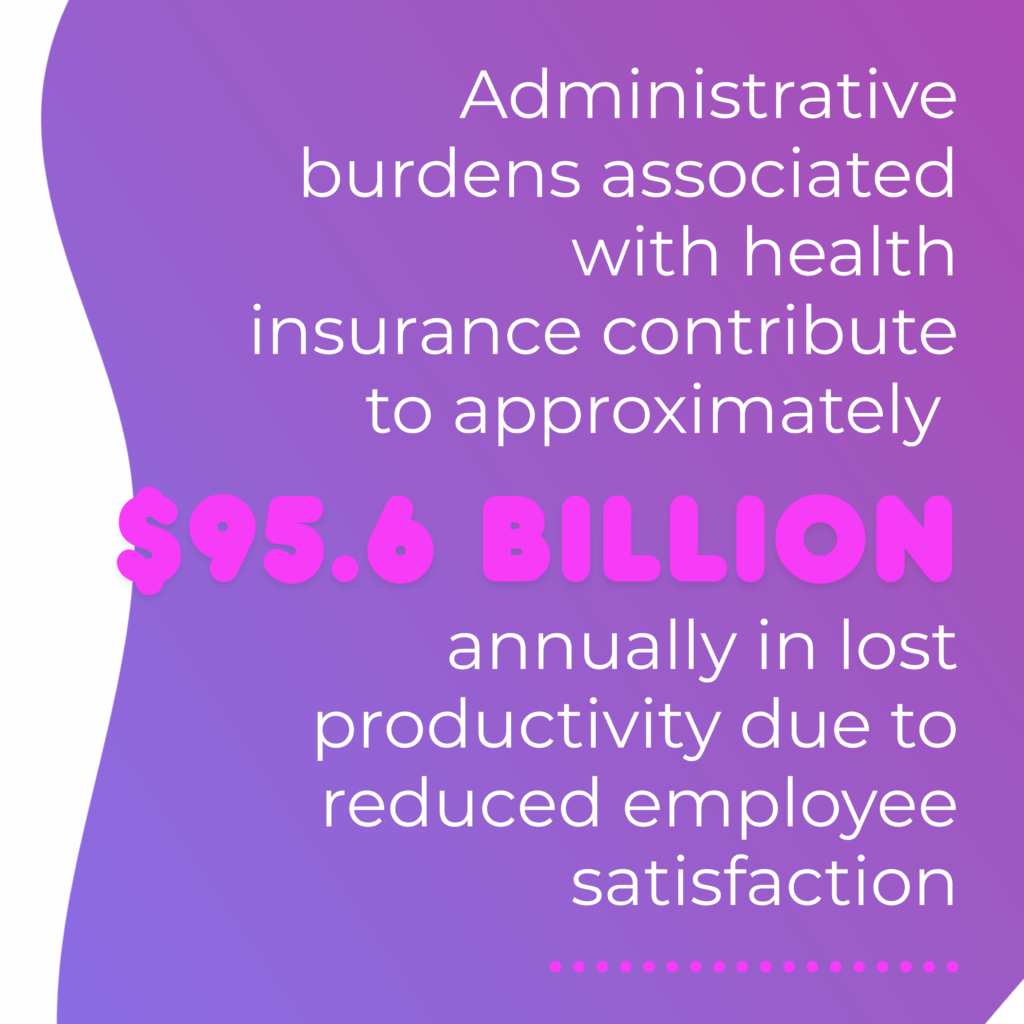
Research published in the Academy of Management Discoveries found that employees who spend more time navigating health insurance administration report higher stress, lower job satisfaction, greater burnout, and more missed workdays. The researchers also estimated that administrative burdens associated with health insurance contribute to approximately $95.6 billion annually in lost productivity due to reduced employee satisfaction, in addition to billions more in employee time and absenteeism costs. (Academy of Management Discoveries)
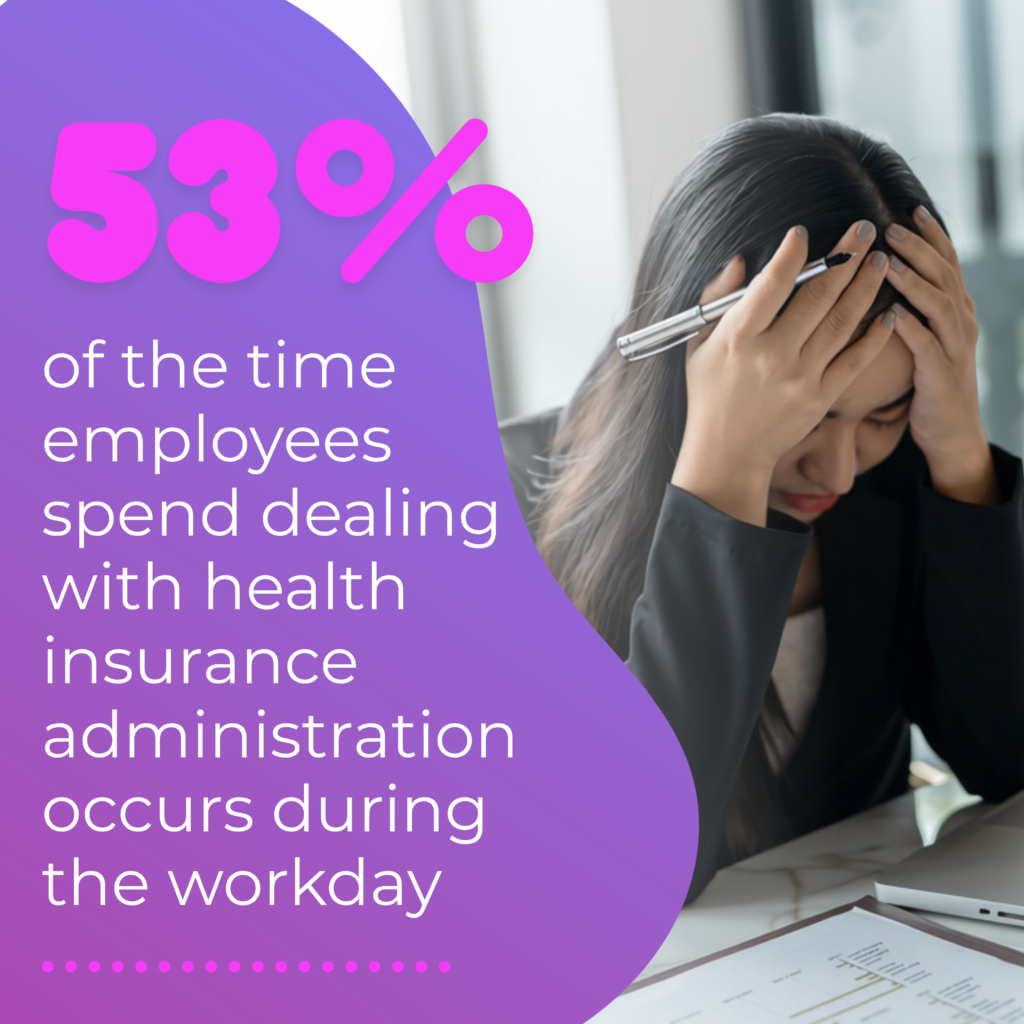
Perhaps even more striking, the researchers found that 53% of the time employees spend dealing with health insurance administration occurs during the workday, meaning employers are often paying for time spent navigating claims instead of performing the work employees were hired to do. (Academy of Management Discoveries)
Think about that for a moment.
More than half of the time employees spend fighting with their health insurance happens while they’re on the clock. Even if the issue is eventually resolved, the time, frustration, and mental energy are gone.
HR Becomes an Unofficial Claims Department
When employees don’t know where to turn, they turn to HR.
What starts as, “Can you help me understand this bill?” often turns into multiple emails, conference calls, carrier escalations, and follow-up conversations over several weeks.
Every hour HR spends untangling claims is an hour not spent recruiting talent, coaching managers, improving employee engagement, developing leaders, or supporting business strategy.
Claims friction doesn’t just affect employees; it quietly consumes valuable HR resources as well.
The Difference Between Having a Broker and Having an Advocate
This is where many employers unknowingly leave a gap in their benefits strategy.
Most brokers focus solely on the renewal instead of claims advocacy and employee experience.
At Ellingson Group, we believe employees shouldn’t have to become insurance experts simply because something doesn’t look right.
The moment an employee receives an unexpected bill, notices a denied claim, encounters a prior authorization issue, or simply has a question about their coverage, our dedicated Benefits Advocates step in.
Rather than asking the employee to spend hours on hold – or expecting HR to play middleman – we work directly with our escalated contacts at the insurance carrier and will work directly with the provider, pharmacy, or billing office to determine what’s happening and drive the issue toward resolution.
Our philosophy is simple:
The sooner we get involved, the faster the issue gets resolved.
By stepping in at the very first indication that something isn’t right, we often prevent a minor issue from becoming a major frustration. And, in fact, we strongly prefer that employees come to us before they are frustrated.
Instead of an employee spending days wondering whether they owe $12,487, they have an experienced advocate investigating the issue, communicating directly with the appropriate parties, knowing what questions to ask and when the answers warrant pushback, providing regular updates, and working toward a resolution.
That means:
- Less time on hold for employees.
- Fewer interruptions for HR.
- Faster claim resolutions.
- Less stress for everyone involved.
- Employees who feel supported instead of stranded.
- A positive benefits experience.
Our clients don’t hire us simply to negotiate renewals once a year.
They hire us because when life happens – and healthcare inevitably gets complicated – they know they have an experienced team ready to advocate for their employees.
Employees Don’t Separate Their Health Plan From Their Employer
Here’s another part many organizations underestimate.
Employees rarely blame only the insurance carrier; they blame the experience.
And because their employer selected the health plan, that frustration often becomes associated with the employer itself. What makes this even more critical is the fact that once an employee has a bad experience with their benefits, it is extremely hard to turn that perception around.
Research shows that employees who spend more time dealing with health insurance hassles report lower workplace satisfaction, greater burnout, and more missed work. (Academy of Management Discoveries)
When an employee says “My insurance is terrible,” what they often mean is, “My employer isn’t taking care of me.”
Whether that’s fair or not, perception becomes reality.
Conversely, when an employee receives prompt, knowledgeable help resolving a complicated claim, they remember that experience too.
They remember that their employer invested in a partner who didn’t leave them to figure it out alone.
The Bottom Line
A health plan isn’t simply an insurance product; it’s an employee experience.
Every denied claim, confusing bill, and unresolved issue quietly consumes time, productivity, and trust.
The employers with the strongest benefits programs aren’t always the ones spending the most money on benefits.
They’re the ones making sure employees never have to navigate the healthcare system alone.
At Ellingson Group, that’s exactly what our Benefits Advocates are here to do. We step in at the first sign of trouble, take ownership of the process, and work tirelessly toward a resolution so your employees can get back to what matters most: their health, their families, and their work.
Because the true value of a benefits program isn’t measured only by what it covers.
It’s measured by how effortlessly employees can use it when they need it most.
Sources
Time Magazine – When Fighting with Your Insurance Company Becomes a Full-Time Job